
The afternoon can stretch longer than expected: lunch is behind you, dinner is still a while off, and the next meeting has no clear end. Rather than treating a snack as a problem to solve, consider what would make this part of your day more manageable. Hunger, schedule, access to food, and your individual nutrition guidance all matter.
Notice What The Afternoon Needs
Before reaching for something, take a moment to check whether you are hungry, planning ahead for a long gap, or simply looking for a brief pause. There is no single answer that fits every day. A snack may be useful for one person or situation and unnecessary in another.
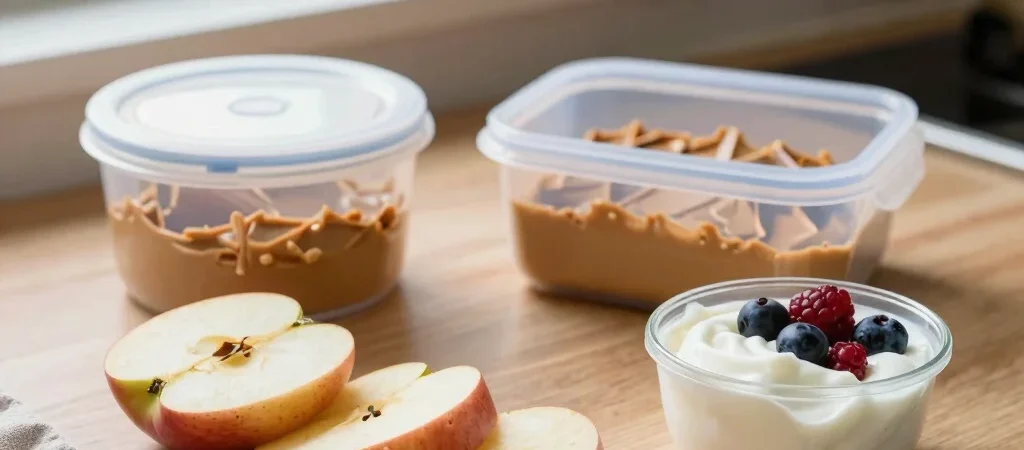
If you expect dinner to be late, it can help to have an option ready rather than relying on whatever is closest when you are rushed. An apple with peanut butter, plain yogurt with fruit, or whole-grain crackers with hummus are examples of portable combinations. Choose portions and ingredients that fit your needs and any guidance you follow.
Make It Easy To Reach
A snack plan only helps if it works where your afternoon happens. Keep shelf-stable choices such as nuts, roasted chickpeas, or whole-grain crackers in a desk drawer or bag, and use a small insulated container for foods that need to stay cool. At home, placing washed fruit or yogurt near the front of the refrigerator can make the practical option easier to notice.
Read labels when they answer a question that matters to you, such as the amount of carbohydrate or sodium in a packaged snack. You do not need to compare every product in the aisle. If you have specific targets or questions about how a snack fits with medication, your care team can help make the advice personal.
Use The Plan As A Prompt
A snack list is a backup, not a schedule you have to obey. Some days you may need something earlier; other days lunch carries you through. Keep two or three choices available and let your appetite, routine, and care plan guide the decision.
For a low-effort start, choose one snack you already enjoy and make it easier to access this week. Put it on the grocery list, portion it if that is useful, or leave it where you will see it before heading out. A small plan that fits your actual afternoon is more useful than a perfect plan you never reach.