
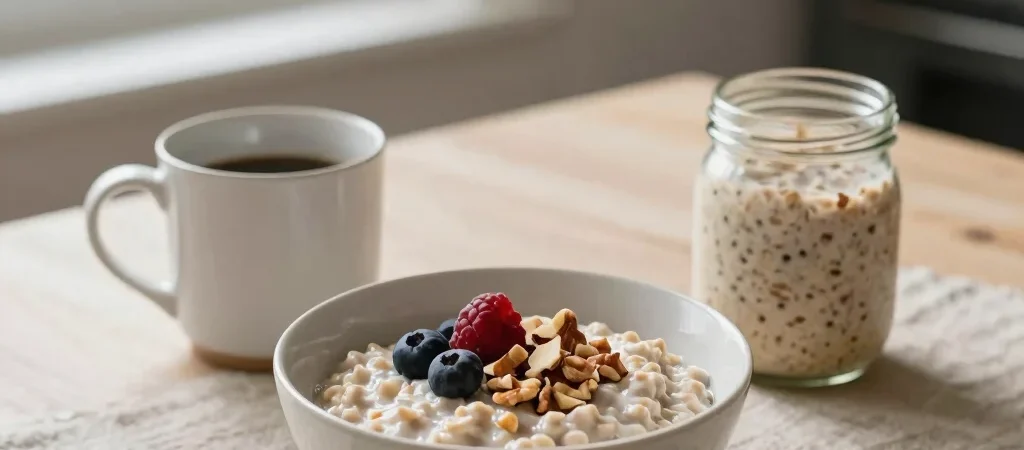
The alarm goes off, the coffee is brewing, and there are ten minutes before the first call. This is not the moment most people want to assemble a complicated breakfast. A better approach is to keep a couple of quick options in rotation, then adjust them to fit your preferences and the guidance you have received for managing Type 2 Diabetes.
Choose A Simple Starting Point
Think in combinations rather than a perfect breakfast. Plain yogurt with berries and nuts, oatmeal with peanut butter, or eggs with whole-grain toast are examples that can be adapted to what you enjoy and have available. Foods containing carbohydrates affect people differently, so use the portions and choices that fit your own care plan.
A short list on the fridge can make the choice easier: one option that needs no cooking, one that takes a few minutes, and one you can prepare the night before. For overnight oats, combine oats and milk or an alternative in a jar, then add fruit or nuts in the morning. Keep the recipe flexible; the point is to remove a decision, not create a new rule.
Plan For Your Actual Morning
If you eat at a desk or on the way out, choose something that travels without much fuss, such as a small container of yogurt and berries or a simple egg-and-vegetable wrap. If mornings are unpredictable, set out the bowl, spoon, or jar the night before. Small preparations count when they make a routine easier to repeat.
Some people wake up hungry; others do not. You do not need to force a particular breakfast simply because it is called the most important meal of the day. If your medication or treatment plan affects when or whether you should eat, ask your care team for guidance specific to you.
Keep The Routine Flexible
A breakfast routine can be dependable without being identical every day. Keep a few staples around, such as oats, eggs, frozen berries, or whole-grain bread, and swap among them as your appetite and schedule change. If a planned ingredient runs out, use another option rather than treating the morning as a failure.
Try preparing one breakfast component tonight—washing berries, boiling an egg, or setting oats to soak—and notice whether it makes tomorrow easier. Keep what works and let go of what does not. Sustainable routines are built around the mornings you actually have.